| Login or register so that you can make a comment. | força Diana sou amigo dos teus pais e sou o marido da prof. Celina. um dia tens de me tirar o medo de voar. bj e boa sorte ![]() velhinho, Porches, 12 August 2010 02:45 am |
Diana Gomes da Silva
Queen of the Skies

We found the young aviator taking a rest with family in the tourist development of Pedras del Rei, Tavira. During our interview, she revealed that she’s putting an acrobatic team together with partner/ boyfriend and TAP pilot João Bettencourt. Their plan is to take part in international air acrobatics championships.
As the young lady, nicknamed “Rainha” (the queen) by work colleagues explained, the pair hopes to revolutionize the way aerial publicity is carried out in Portugal and open a new flight-safety school in Tires.
How do you manage to deal with two very different forms of aviation? Working for an airline – where everything has to be exact – and acrobatics, which is a very much more exhilarating kind of activity?
Well, the basics of flight are really the same for both. Everyone thinks that it’s just in commercial flying that everything needs to be very precise, but actually in aerial acrobatics, it’s even more so.
From the moment I take off, I’m totally concentrated on all the manoeuvres I’ve got to go through: I have to climb to altitude “x”, at speed “x”, go through the sequence of manoeuvres, come out of them and do some more. In other words, it’s all mapped out until the moment I return to the ground. An aerial acrobatics flight is much more precisely thought out than any regular airline flight which, in many cases, ends up being simply a matter of routine.
Is there time for emotions?
Of course! It’s all worked out to the last dot intellectually – but at the same time there’s an indescribable feeling of adrenaline!
How did aviation come into your life?
My grandfather Carlos – my mother’s father – had a plane in Angola. But he never passed his passion on to me. He died when I was 13, and we never talked about planes. I think that was because, at the time, I wanted to be an astrophysicist.
But, as it happened, at the age of 17 I couldn’t continue with this idea - for various reasons, one of which is that in Portugal you need extremely high grades to be accepted onto a course in astrophysics! So, as I really liked planes as well, I decided to choose aviation.
Did anyone encourage you to fly?
No, no-one. In the beginning not even my parents liked the idea. It’s the kind of profession where you need a certain ability. A flair for flying helps a lot.
What do you mean by a flair?
Well, above all, you’ve got to love it unconditionally. It’s got to be the whole motivation in your life, independent of anything your life might be. The “financial motivation” – which attracts a lot of the wrong people into professions – is definitely not enough for a person to be “technically” good at flying…
Do you really think there are people who fly just for the money?
Oh yes! In fact, in the last few years there’s been a real boom in the number of people who go into aviation as a form of investment – not because they love it, but because of the financial implications.
Well, there is still the impression that pilots have an amazing life…
I don’t earn badly at all – but I’m paid for the responsibility I take on. And, in the end, I’m paid for all the weekends that I’m not at home, the Christmases and Bank Holidays that I spend on my own, the holidays I don’t have.
As pilots, we’re more exposed to cosmic radiation than other people, and we run a much higher risk of developing skin cancer, and cancers elsewhere on the upper body. Recent studies show that a pilot actually has a lower average life expectancy than any other professional.
Did you know this when you began your career?
No! But once I made my first flight, I knew straight away that flying was what I wanted in life.
Do you think there’s an “aeronautic culture” in Portugal?
Hardly at all – but I do see a very great potential for one, as people here love airplanes. Another thing I notice is that I’ve got a huge following – a lot of people supporting me. I wasn’t expecting that at all. But then, I have to say that I had a meeting not long ago with a large firm who told me: “for us, the only sport is football”!
How did you react?
Well, there are two ways of dealing with things one doesn’t like to hear in life. If there’s an intellectually stimulating point one could debate, the discussion could continue. But if it’s not worth it, there’s no point saying anything. That’s what I did.
I cannot explain to someone who says something like that to me that I am an airline pilot, that I have to study, work with simulators and face huge physical and intellectual challenges that don’t allow for any errors. A footballer kicks a ball. If he doesn’t score a goal, it really doesn’t matter. That kind of error in flying could cost lives.
And what’s the life of an aerial acrobatic pilot like?
That’s a good question! Up until now, it’s been a huge personal investment. I’m at the moment trying to change the way people see aerial acrobatics in Portugal. There are various ways of turning it into something financially sustainable. One of those is via publicity – and having a plane associated with a particular brand name.
Why did you choose the “Pitts Special”?
For me, it’s the most beautiful airplane in the world. Technically, it’s very hard to fly – a huge challenge – because it’s a plane from the 60s, and despite the charm of being a bi-plane, this brings with it some disadvantages. But, overall, it’s a fantastic machine. My one has three propeller paddles, which means that it can do gyroscopic manoeuvres.
Where is your plane?
In Tires. The borough of Cascais has sponsored me. It’s there that we’re hoping to open our flight-safety school shortly.
Is it useful for an airline pilot to know how to do acrobatics?
Absolutely! Acrobatics and a different approach to flying help improve one’s performance a lot. In fact, knowing how to do acrobatics helps a pilot respond to anything out of the ordinary in a much more calm frame of mind.
How do your colleagues at SATA feel?
The general sentiment is admiration. They support and respect me immensely.
Have you had any scares in your career?
The greatest scares I’ve had in my life up till now have been on Portuguese roads! Other than those, in aerial acrobatics – thanks to the training I’ve had and the principles I’ve always followed, I’ve never had any problems.
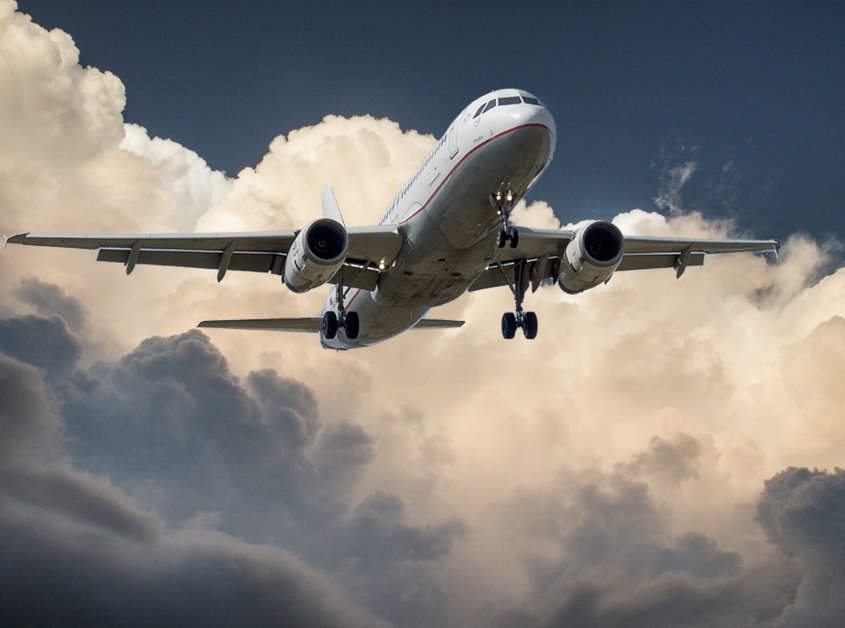
But, in airline flying, I have. I had a birdstrike – a bird that broke his nose flying into my Airbus A320 – and once, the landing gear didn’t discharge as it should have done. I’ve been given wrong speed-readings, too – which is one of the worst things that can happen.
Do you consider yourself a model for Portuguese women?
Very much so! Because of my journey through life/ for being so determined to follow my dreams. Of course, I’ve had to give a lot of things up along the way.
There’s the family side of life that women often have in first place and which, at the moment, I don’t have – and which obviously is a secondary plan behind the professional one.
And what about air racing?
Yes, that’s a plan too. But I have to develop technically to enter a competition like the Red Bull Air Race. Next year, I’ll be competing in the Reno Air Race, in the US.


velhinho